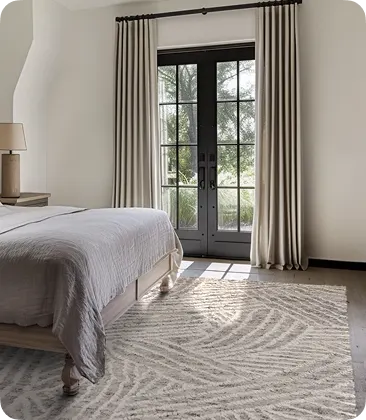
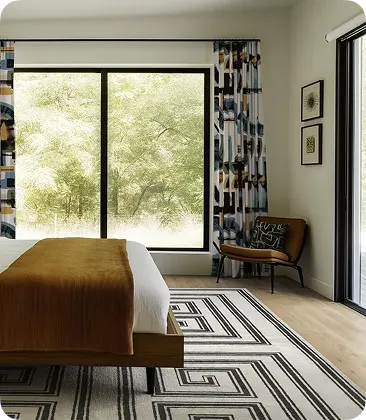
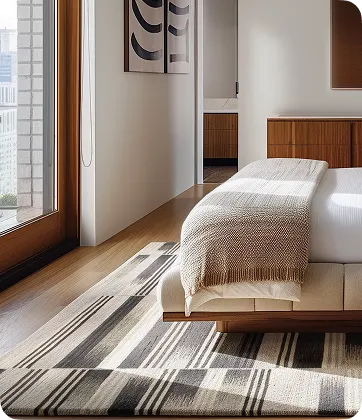
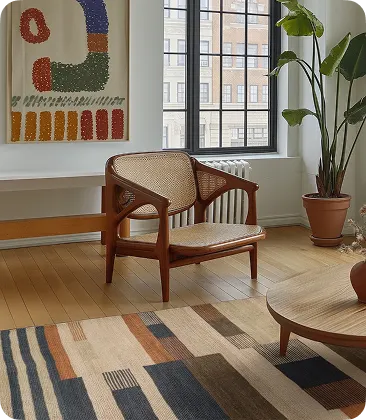
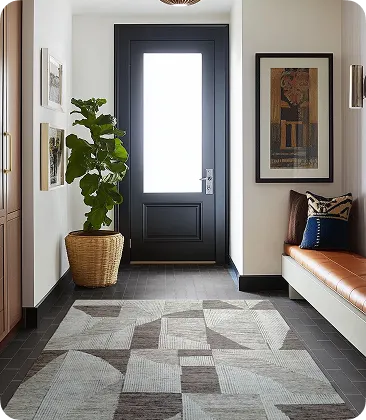
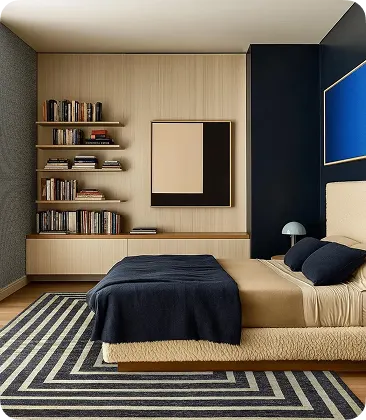
Choosing the right area rug starts with understanding the room’s function, size, and layout. For living rooms, the rug should be large enough to anchor the seating area, ideally fitting under the front legs of sofas and chairs. In dining rooms, select a rug that extends beyond the table so chairs stay on the rug when pulled out. Bedrooms benefit from rugs that add softness underfoot, either placed beneath the bed or layered alongside it. Consider pile height as well, low-pile rugs work well in busy areas, while plush styles feel cozy in relaxed spaces. Balancing scale, comfort, and durability ensures the rug enhances both the look and usability of the room.

Area Rugs Samples
Frequently Asked Questions
When evaluating rug colors and patterns, view them alongside your existing floors, furniture, and wall colors whenever possible. Rugs with subtle patterns or blended tones tend to be more versatile and forgiving, especially in rooms with bold furnishings. If your floors are dark, lighter rugs can create contrast and brightness, while darker rugs ground lighter floors. Pattern scale also matters, large patterns suit spacious rooms, while smaller, tighter designs work better in compact areas. Observing how the rug looks in different lighting throughout the day helps ensure it complements your space rather than competes with it.
For high-traffic spaces and homes with pets or kids, durability and easy maintenance are essential. Materials like wool, nylon, and polypropylene are popular choices because they resist wear, stains, and crushing. Wool rugs are naturally resilient and hide dirt well, while synthetic options are especially budget-friendly and simple to clean. Flatweave and low-pile rugs are ideal for busy rooms since they trap less debris and are easier to vacuum. Choosing materials designed for everyday use helps the rug maintain its appearance even with constant activity.
Light-colored rugs are the most effective for making a room feel larger and more open. Shades like ivory, beige, soft gray, or pale blue reflect light and visually expand the space. Rugs with minimal contrast, gentle patterns, or subtle stripes can also enhance the sense of width without overwhelming the room. Matching the rug color closely to the floor creates a seamless look that reduces visual breaks. In smaller rooms, keeping the rug simple and light helps the space feel airy, balanced, and less crowded.