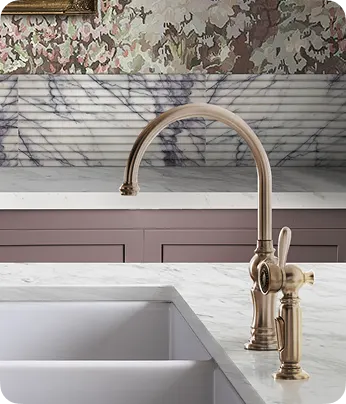
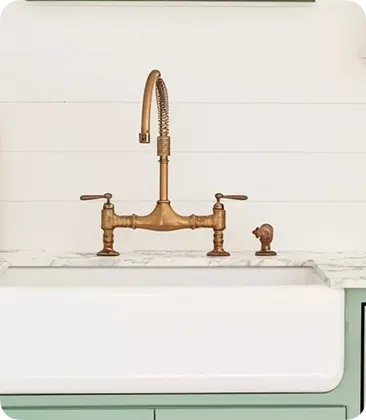
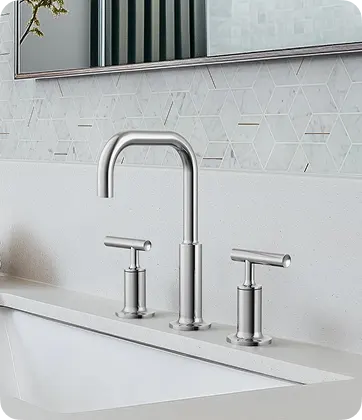
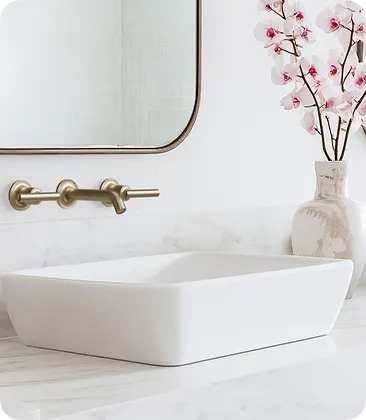
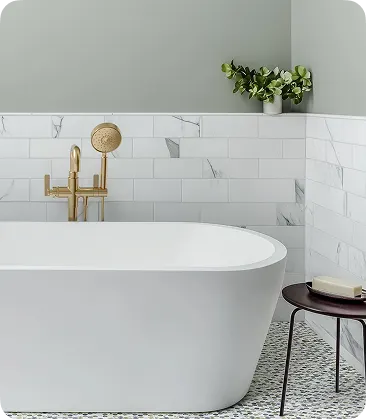
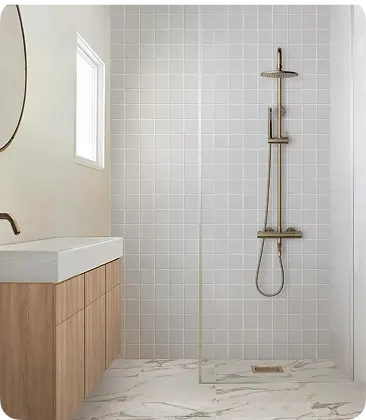
Kitchen fixtures are typically chosen with function and durability in mind, since they see frequent use for cooking, cleaning, and food prep. Styles often lean more streamlined or transitional, with features like pull-down sprayers and taller spouts for added convenience. Bathroom fixtures, on the other hand, are more design-driven and can be softer or more decorative, reflecting the room’s role as a personal retreat. When choosing fixture samples, think about how the style supports the room’s purpose while still complementing the overall design of your home.

Faucets & Fixtures Samples
Frequently Asked Questions
Lighting, screen settings, and surrounding colors all affect how finishes appear online versus in person. A brushed nickel or matte black finish may look warmer, cooler, lighter, or darker depending on the lighting in your space. Reflections from nearby surfaces, like countertops or tile, can also change how a finish reads. Viewing fixture samples in your own home helps you see the true tone and texture under real-world conditions.
The most reliable approach is to order physical fixture samples and view them together in the intended space. Place them near cabinetry, countertops, and tile to see how the finishes interact with other materials. Observe them at different times of day, since natural and artificial light can shift their appearance. Comparing samples side by side makes it easier to spot subtle differences in sheen, warmth, and texture before committing.
Yes, mixing finishes or styles can add depth and personality when done thoughtfully. The key is to keep the mix intentional, such as pairing one primary finish with a secondary accent finish. For example, you might use one finish for major fixtures and another for hardware or lighting. Maintaining consistency in style, whether modern, traditional, or transitional, helps the space feel cohesive even when finishes vary.